Urban EDC Supply Jib Review
Note: This review, as with all content I write on this site, is my opinion. It does not reflect the opinion of others, including the American Knife and Tool Institute (AKTI), the cutlery trade group that I advise on legal matters.
I reviewed an F5.5. I liked it. It was brass so it was heavy, but it was also larger than it had to be for my needs. Nonetheless for a year or two I was cyberstalking the Urban EDC Supply webpage, looking for an F5.5 in lighter materials. I saw a carbon fiber one and hesitated, which is the wrong thing to do with F5.5s. They come and go so fast that by the time I pulled out my wallet it was gone. I stalked some more and then, as if my magic or willed into existence by my craving alone, they announced a smaller version of the F5.5 called the Jib. I have carried it quite regularly in the six weeks since I received it (its arrival came just at the right time). This is an excellent knife. The question I have not answered in my own mind as I write this intro is how good. I like it a lot, but I also like the Giant Mouse Riv a lot. Which is better? I am not sure. This review will cement the answer in my brain.
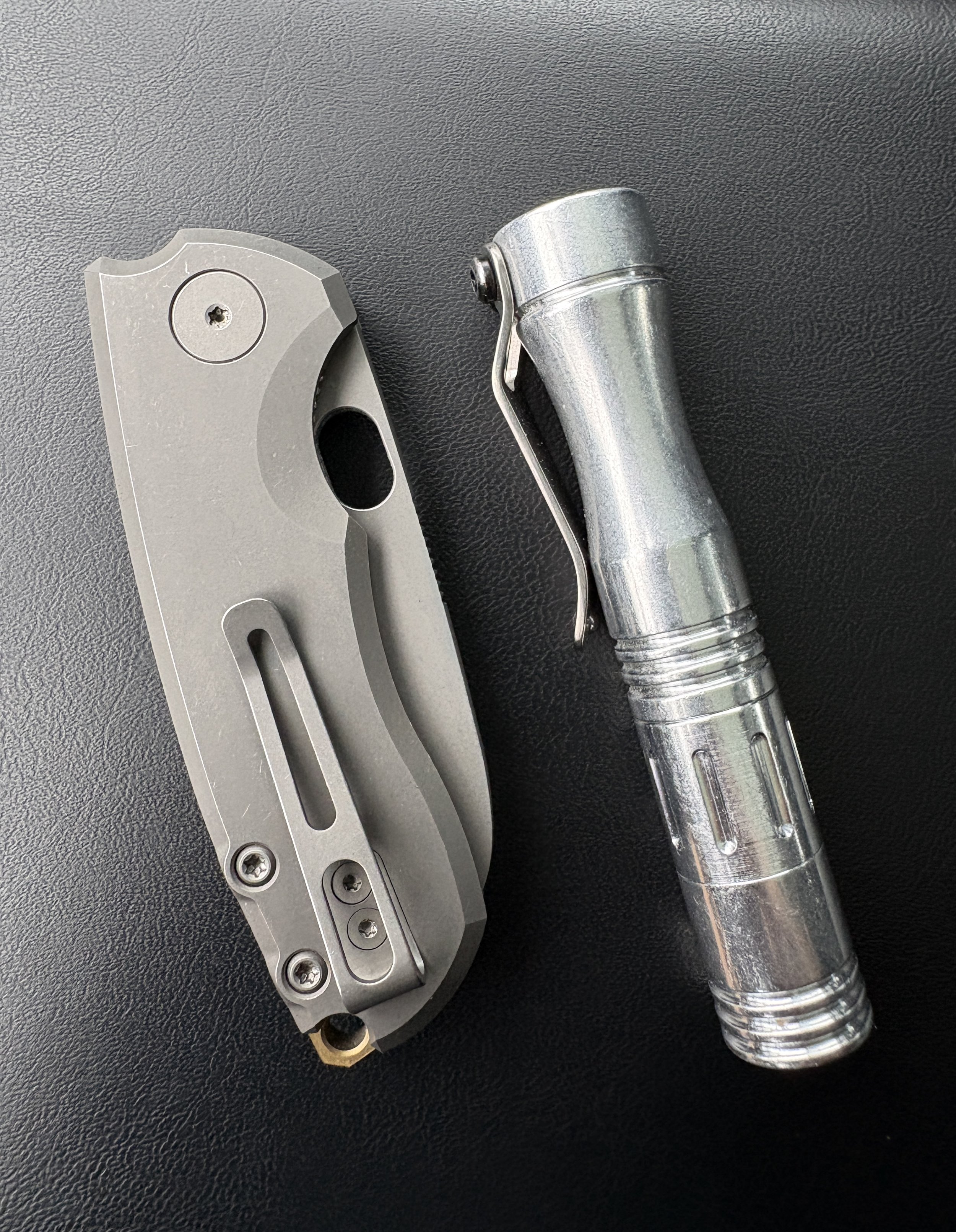
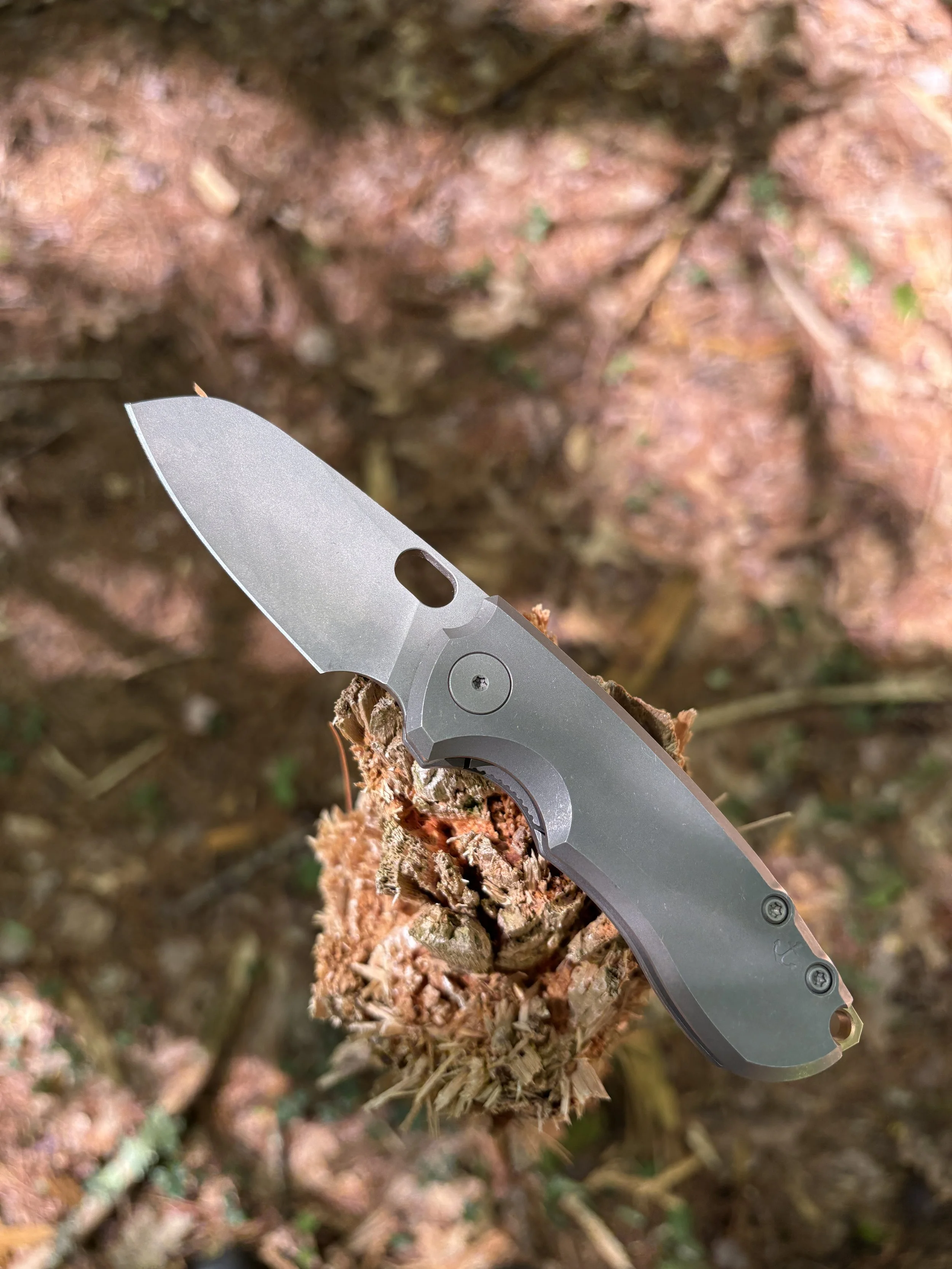
Here is the product page. Here is a review. Here is my review sample, purchased with my own money, and mine to cherish:
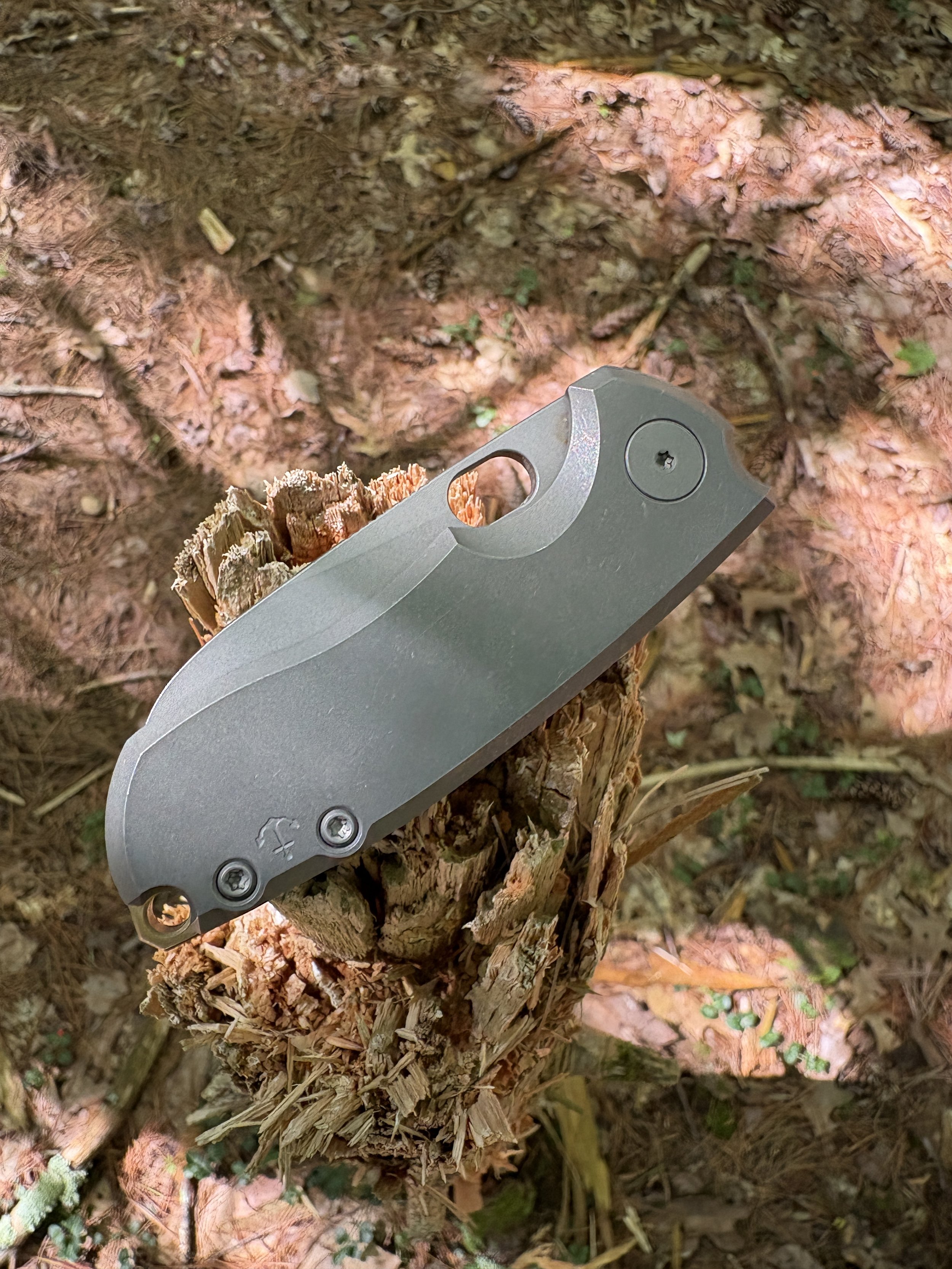
TLDR: Very Voxnaes-y and very good.
Design: 2
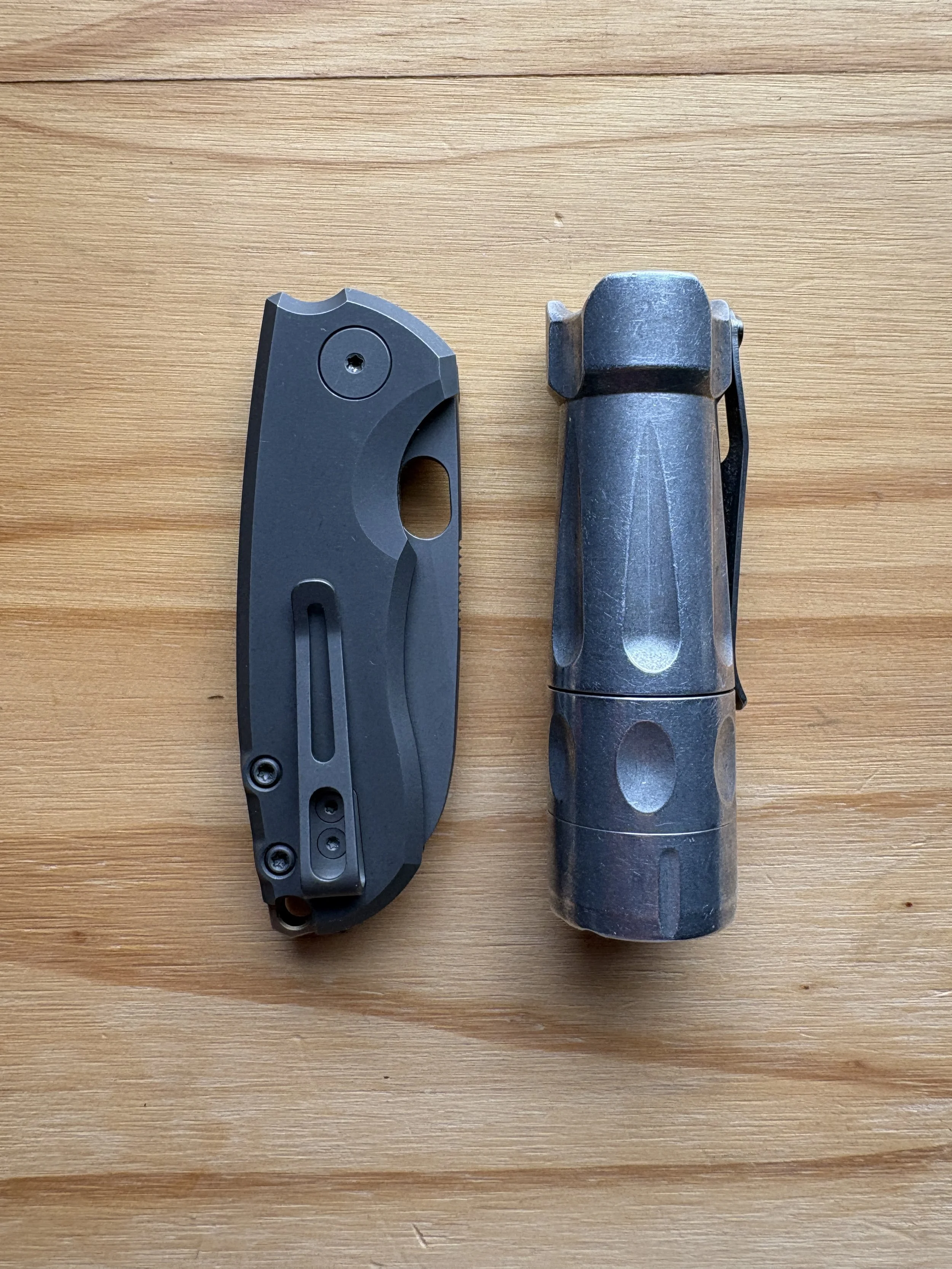
Some knives these days have what Jay Leno calls the “Atomic Bug” look. They are festooned with slits and gills, all of the lines are sharp angles, and the knives themselves just look uncomfortable to hold and use. The Vosteed RSKAOS is, perhaps, the best exemplar of this design approach. Its impractical shapes and silly, hypermasculine lines do nothing for me. Then there is the Uncle Randy design approach—this is what you see on most of the slip joints out there and a lot of the stuff from Buck and AG Russell. Aside from Pete’s comedic stylings, which are great, this too is a design approach that leaves me cold. I like it better than the Atomic Bug stuff, but it just isn’t my speed. Then there is what I would call Restrained Minimalism. This is stuff like the Triple Aught Design Dauntless line of knives. They have an aesthetic that looks clean but still gear-ish. Tactical without tacticool. In the end, it is hard, as a 48 year old male, to dislike this design language. And it is here where I find the Urban Jib best fits. The clean lines of Danish design come through, but there are still a few swoops and cuts that let you know this is a knife, not just an Apple accessory. The fact that this design aesthetic works promotes a more focused design, something that isn’t overtly aggressive and, at the same time, still works well.
Fit and Finish: 2
This is an immaculately made knife. There is no stray line, no wobbly grind, and every surface is beautifully finished. I would put the degree of difficulty at a relatively low bar, but the execution is absolutely perfect. You won’t be disappointed. Heck the knife even feels good in the hand, smooth and worn in, like a stone found on the beach.
Grip: 1
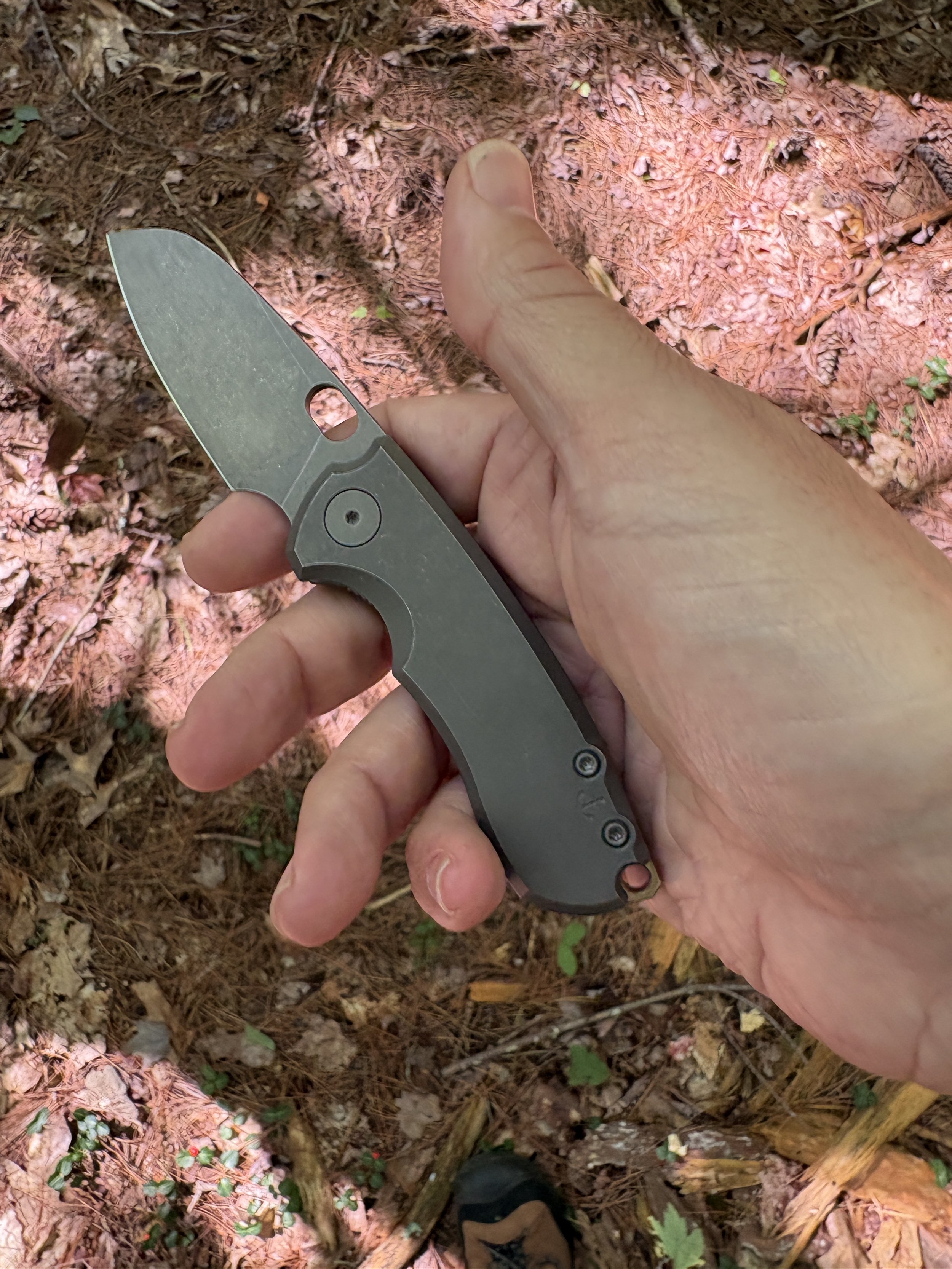
Its a little cramped on the Jib handle. I don’t think it is necessarily the size that is the problem, but instead, the complexity of the shape. If you made the index notch bigger, it might improve the handle. But it could also impact the “palm swell” portion. If you eliminated the index notch altogether it might mess something else up. The funny thing is while not as bad, the F5.5 had the same issues for me. It was just a bit like your fingers are in a crowded elevator. Its not a fatal flaw, not at all, but the knife could be better in this regard.
Carry: 2
With a nice combination of materials and size, the Jib just sings in the pocket. You notice its there, but it never bullies your pocket’s contents. It is always just good to have on you. There are other full titanium products like this too—the Chris Reeve Small Sebenza carries a lot like the Jib. To me, that is a complement.
Steel: 2
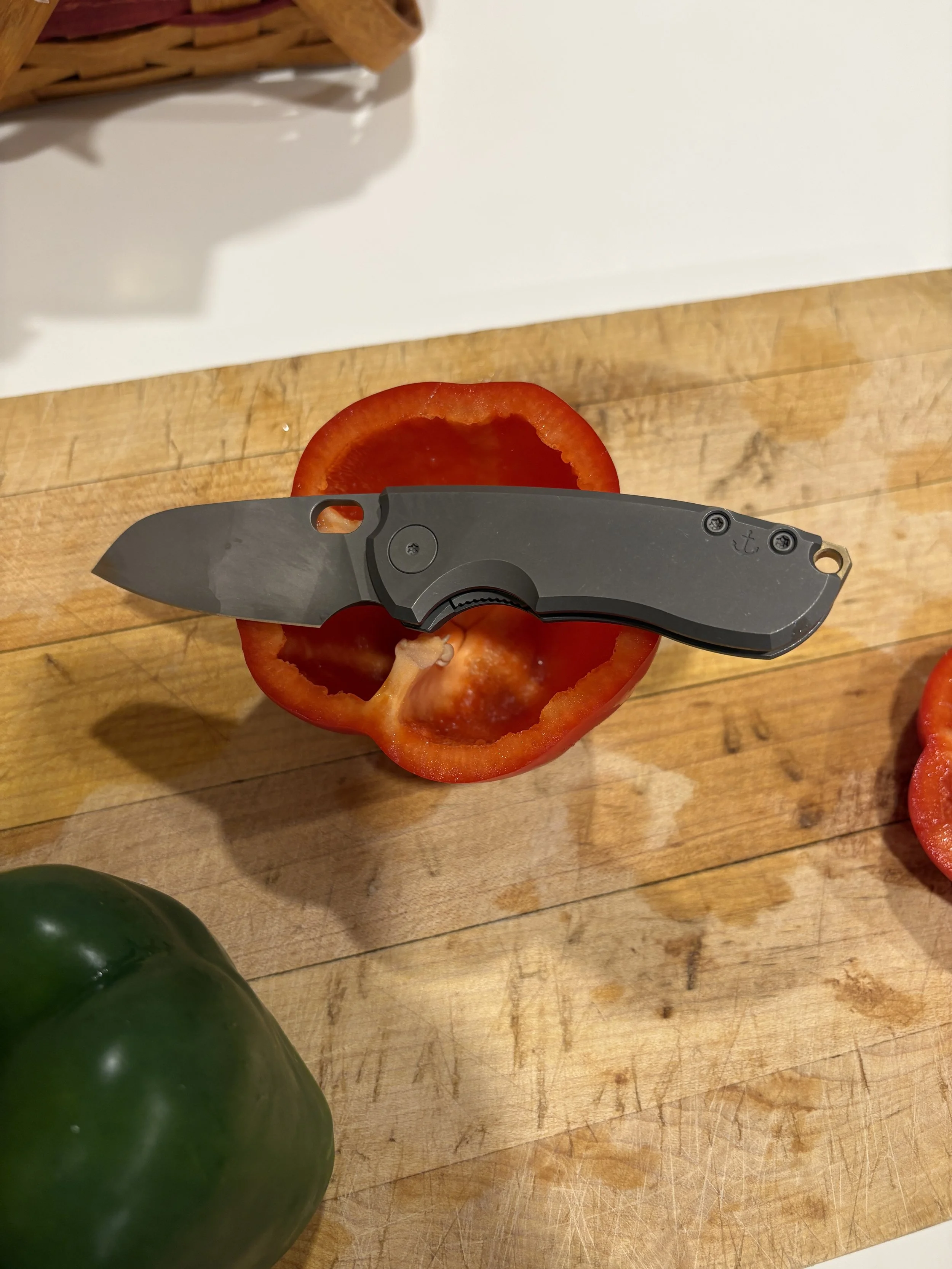
Vanax is roughly equivalent to Magnacut, and I love Magnacut. I plowed the Jib through all sorts of stuff from this batch of peppers (BTW I think sausage and peppers might be my Death Row meal; that or the Beef Bourguignon from Elephant Walk in downtown Boston…I know, I know radically different things). It also separated paper, cardboard, zip ties (so, so many zip ties), and leather with aplomb. It worked as a marking knife in maple, walnut, and pine quite well. All of this happened without the need for a resharpen, just a strop. Zip zip zip and I was ready for round 2.
Blade Shape: 2
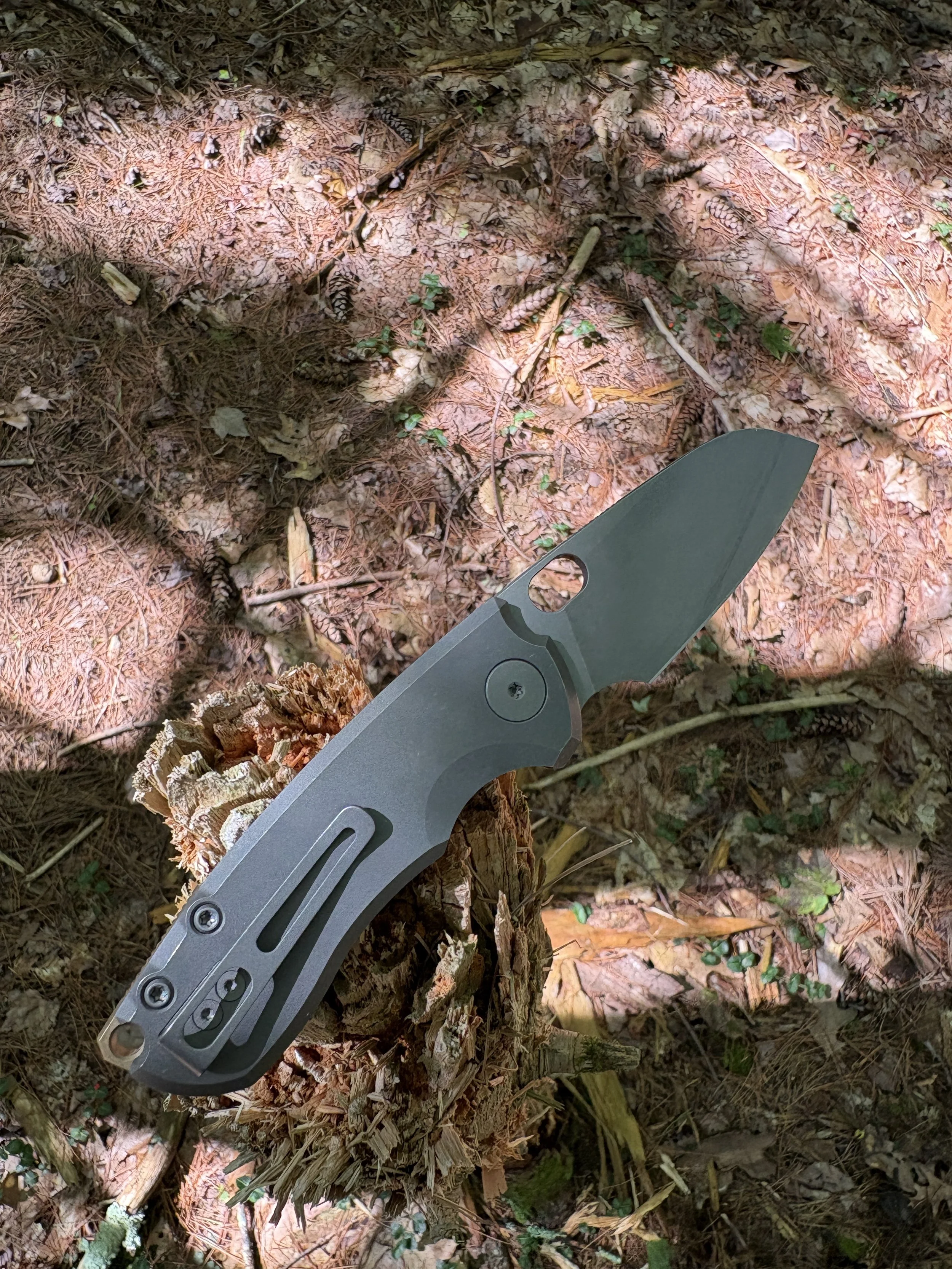
With a distinctive and friendly blade shape, the Jib was never a suspected interloper. It was, most of the time, unnoticed. We have new employee at work and they are not yet aware of my predilection (or addiction…its a fine line) for knives and even they didn’t comment when I used the Jib for a few tasks around the office.
Grind: 2
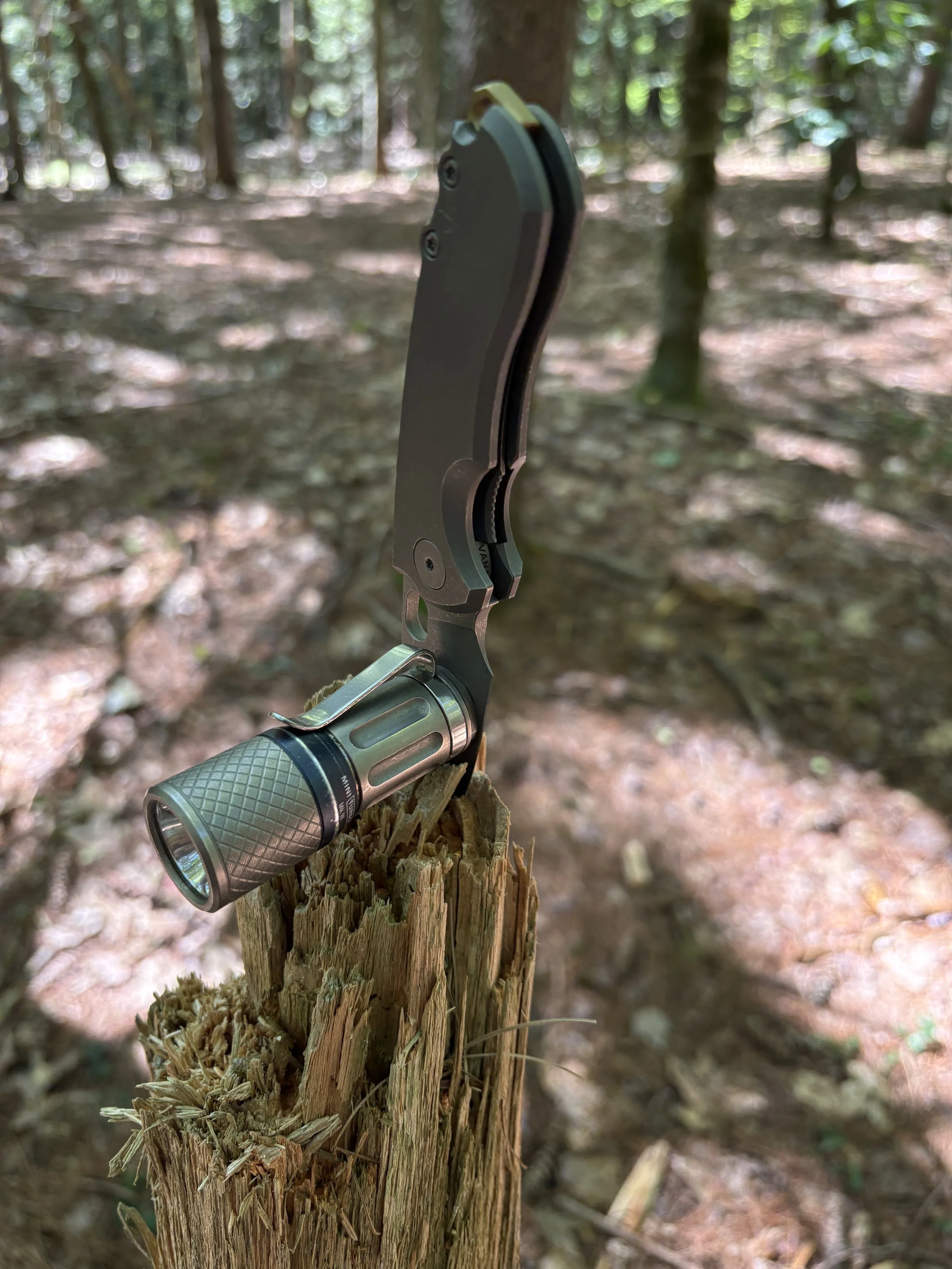
I have started doing some very, very basic leatherwork and it has raised the bar for sharpness in my mind. Knives that previously split cardboard were sharp. Now I want something that produces the wonderful crunch of cutting through all the layers of a leather hide. The Jib did that pretty well. It also did it without much pressure. Other knives were better, like the Spyderco Stretch 2 in K390, but the Jib was not far behind.
Deployment: 2
Ah…this is going to be a bit controversial. I think the deployment is truly excellent, but I can imagine that Spydie-flicking fans might disagree. If you just pop it open with your thumb the deployment is top notch. If you want the aforementioned Spydie flick, this ain’t your knife. The handle and hole are too close and the shape around the hole is too complicated for consistent, clean flicks. With a little practice you can get it, but if this is your preferred method of deployment, I think you will be disappointed. I don’t like this method on most knives, so I am not taking off a point.
Retention Method: 2
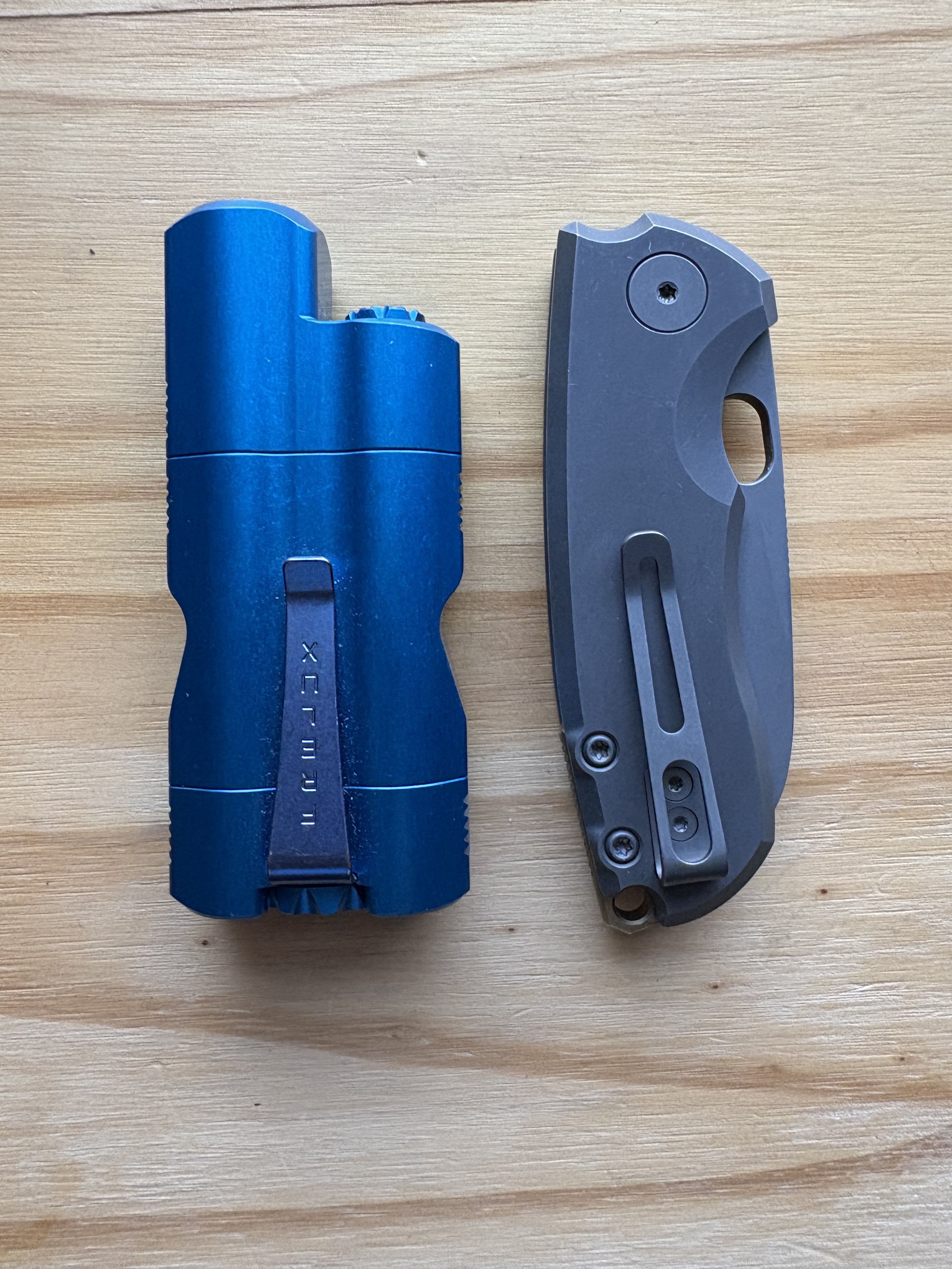
The clip here is Sarah Plain and Tall boring, but I love that in a clip. No muss, no fuss, just function. Thanks for not making this more complicated than it needs to be.
Lock/Blade Safety: 2
Liner lock is my lock of choice and this one is a good one. Easy to engage and disengage and rock solid when in use.
Other Considerations
Fidget Factor: Very High
With a good pivot and a nice detent as well as a very pocketable size, the Jib is as close to a fidget toy as a knife should be.
Fett Effect: Very High
I love when titanium becomes naturally stonewashed. The Jib was stonewashed already, but it is getting that burnished look and feel I really appreciate in gear.
Value: Low
At $300 this isn’t a terrible deal in the high end market, but that’s like saying something is the most affordable Ferrari. It might be, but it is still an exceedingly expensive car whose price is not strictly related to tangible things like materials, performance, or use.
Overall Score: 19 out of 20
The Jib is a great knife and a better knife for me than the F5.5. Sure the handle is a little cramped, but it’s not that big a deal. I’d rather the more pocket friendly size, to be frank. You carry a knife much more than you use it. I also really like the blade shape. It’s just a no nonsense kind of knife, something that is practical and useful without being ostentatious or frightening. I like this knife a lot and it reminds of the Sebenza in the best possible way.
Competition
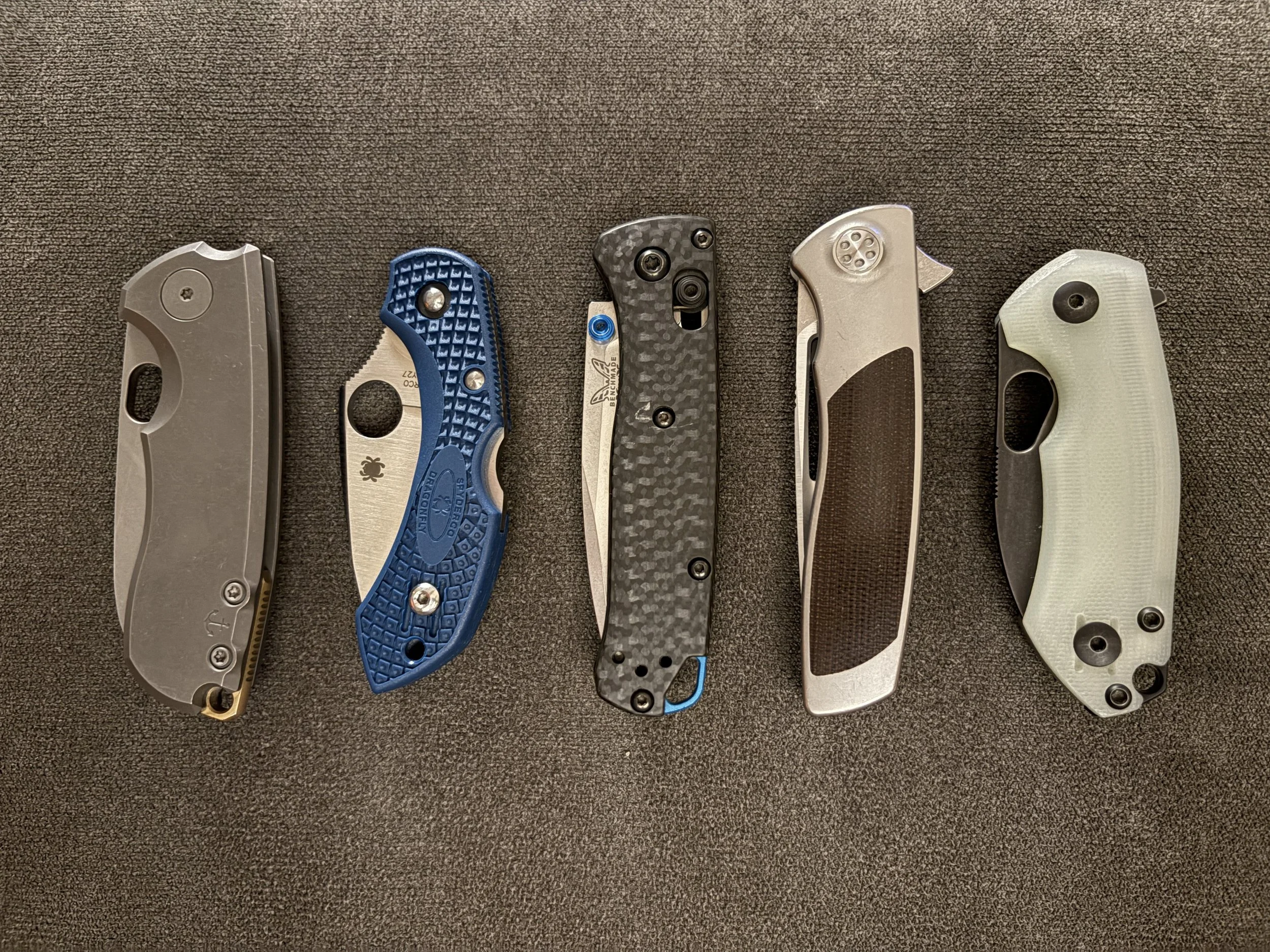
This segment of the market is jam packed with good stuff. I loved the SpyNano. I really enjoyed the Techno and the Techno 2, though I have assiduously avoided the Techno 3 after Nick’s disappointment. It also reminds me of the upscale CRKT Pilar with CF handles and S35VN steel. I also had the Burchtree Bladeworks Euclid, a similarly sized knife, which I think is clearly worse. The Anso Aros is also out there, but I think it is a bit more luxe than this knife. I like this knife better than the Mini Bugout, even in S90V. I prefer the Micro Evo over the Jib, but that might be one of my favorite knives ever. But the thing that keeps coming up as a competition is the aforementioned Giant Mouse Riv. The Riv should be competition—its design lineage also includes Voxnaes.
So which is better? Yikes, that is a tough question. In the end I am going to have to pick the Riv. It just an in-hand masterpiece. Nothing feels weird or out of place. It just all works—the lock, the clip, the deployment. In many ways the Riv is the kind of knife this site has been enraptured by for fifteen years, well-made, sturdy, compact, always more than enough but never too much. It is a fancier version of the Dragonfly. This knife, the Jib, is also great, but it is just a smidge behind the Riv. First, there is the price. Neither are cheap, but $55 isn’t a small difference. I don’t value the titanium enough to think that extra slab of metal makes up for the entire price difference. In fact, if I had a choice I wouldn’t go all titanium on any knife, even the Sebenza. I also like the handle better. The Jib feels cramped with the index notch on the handle. A half and half choice would have worked as would the less prescriptive handle design on the Pilar. I like both being liner locks and the deployment on the Jib is more fidgety than that on the Riv, but point for point the Riv pulls ahead ever so slightly.
In going through the comps another knife warrants mentioning—the Pilar. The S35VN Pilar is one of the two best knives I have ever had from CRKT. This was a truly incredible blade, something that almost everyone missed. And having one next to the Jib reminds me of just how good this knife was. I wouldn’t be sad to see it make a comeback. Is it better than the Jib? Not really, but it was quite good for the money. That said, with better blade steel it would make it hard to pick the Jib over the Pilar.
Amazon Links